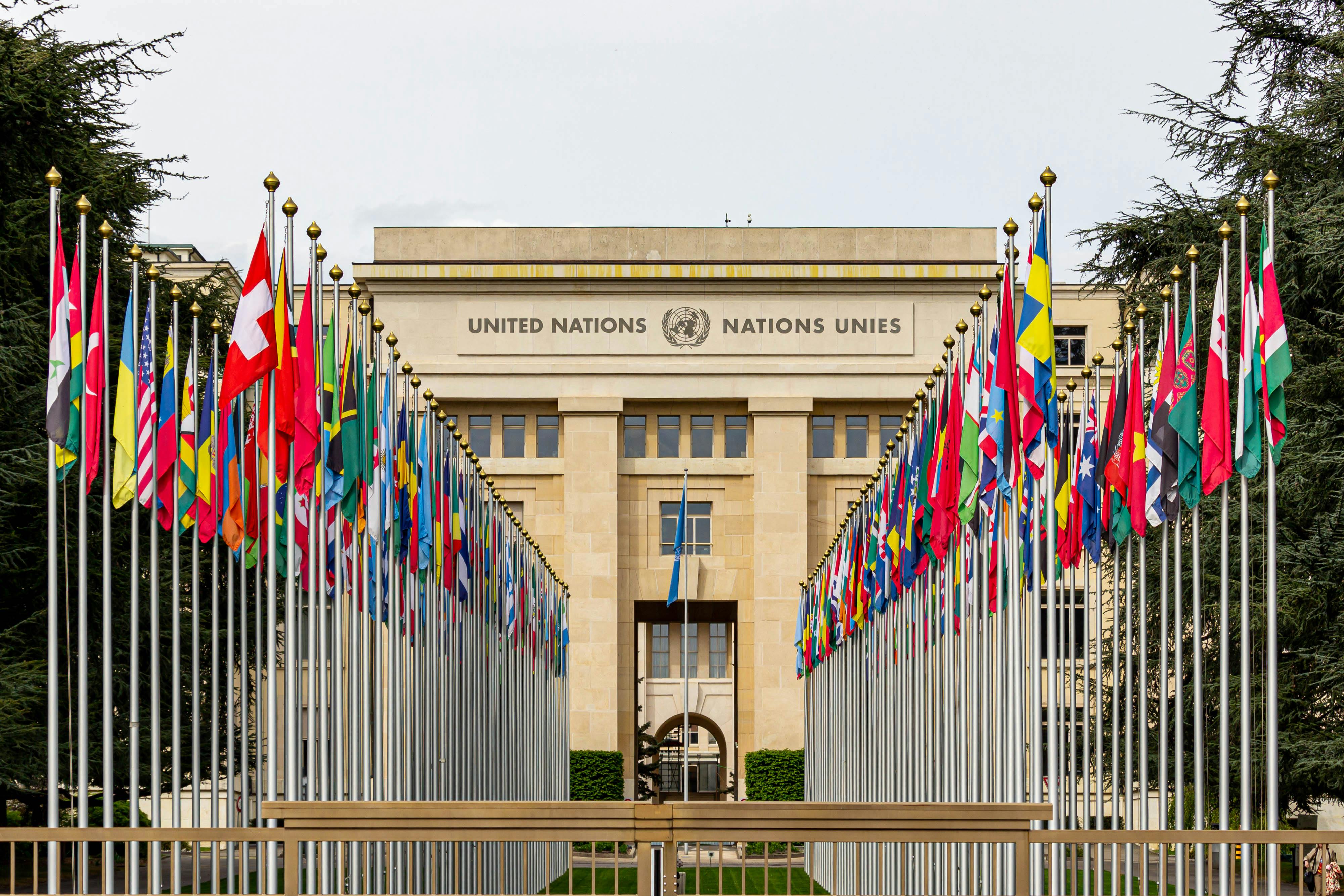
For the First Time CCPR Recognizes Discrimination Against Jehovah’s Witnesses as Religious Minority: Based on the Experience of 12 Believers From Ufa
Moscow, BashkortostanThe UN Human Rights Committee (CCPR) has ruled that Russia violated the rights of Jehovah's Witnesses from Ufa who were subjected to searches, interrogations and — in one case — detention. In its Views adopted on March 13, 2026, the Committee for the first time applied articles 26 and 27 of the International Covenant on Civil and Political Rights in a case of Jehovah's Witnesses, noting that Jehovah's Witnesses are a "vulnerable religious minority" facing discrimination by the state.
Caption: In this video, produced in June 2018, the applicants describe what they had to go through during and after the searches.
The believers filed their complaint 8 years ago — on April 30, 2018. A few weeks earlier, the authorities had authorized searches of their homes, seized Bibles, religious publications and personal belongings, and then interrogated them at the Investigative Committee. In their submission to the CCPR the believers said that "the authorities tried to intimidate them and force them to renounce their faith aiming to suppress the religious practice of Jehovah's Witnesses," and noted that "without any reasonable or objective grounds, they were subjected to criminal prosecution that no other religious organization in Russia had faced."
"At the time of my detention, only one Witness, Dennis Christensen, had been arrested," recalled Anatoliy Vilitkevich, one of the applicants. "My wife and I were following the news and were really worried about how things would unfold. We thought that if the police did come, it would be during a meeting for worship; they would question everyone and let them go — because then, as now, we were sure we hadn't done anything illegal." After the raid, Anatoliy spent 2 months behind bars. He was charged with organizing the activity of a banned organization for friendly gatherings and conversations on spiritual topics. In September 2021, Anatoliy was given a 2-year suspended sentence.
The Committee called the restrictions imposed on Jehovah's Witnesses by the state under the banner of "counteracting extremism" unfounded. "Rather than pointing out any extremist activities perpetrated by the authors [of the complaint], the authorities effectively banned their religious practice in its entirety by subjecting any manifestation thereof to criminal prosecution," the Views state (para. 9.9). The Committee finds that such excessive interpretation and application of the Supreme Court decision resulted in denial of the authors' "right to profess and practice their own religion in community with the other members of their religious minority group" and "threatened the continued existence of their religious community."
In the case Vilitkevich and Others v. Russia (No. 3192/2018), there were 12 applicants (in addition to Anatoliy, they were Alyona Vilitkevich, Venera Mikhaylova, Viner Ganiev, Alfiya Ilyasova, Syuzanna Ilyasova, Yelena Kozhevnikova, Oksana Lapina, Gulfiya Khafizova, Lilianna Khafizova, Nadezhda Yakimova and Olesya Yakimova). The oldest was born in 1960, the youngest in 2001. The Committee ordered the state to pay the believers adequate compensation for court costs and legal expenses, and to compensate Anatoliy Vilitkevich additionally for his time in detention.
In the concluding part of its Views, the Committee effectively takes the case beyond a single Ufa story. It obliges the state to provide an effective remedy, "to make full reparation," and "to take all steps necessary to prevent similar violations from occurring in the future" — a demand for justice for all Jehovah's Witnesses prosecuted in Russia, who now number around 1,000.
